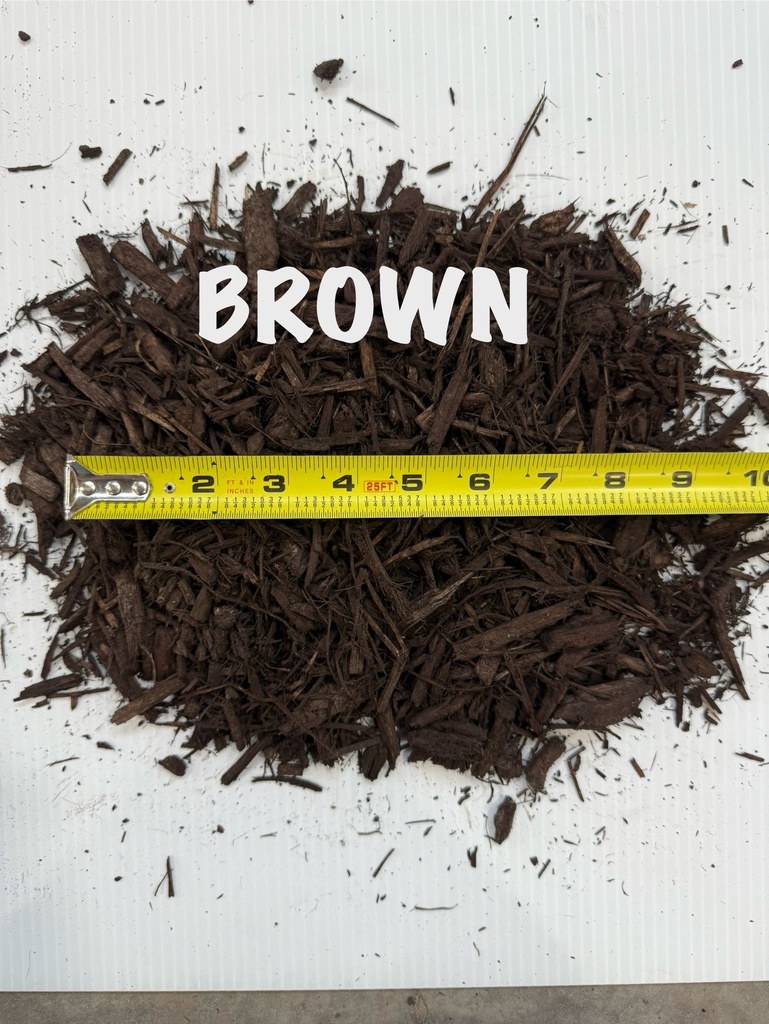
Brown Mulch (Bulk)
CR Mulch Brown Mulch is available in bulk for landscaping and outdoor projects. Perfect for homeowners and contractors who want reliable material delivered directly to the job site.
All bulk products are sold by the cubic yard. Price listed is per cubic yard.
Common Uses
- Landscape beds and borders
- Moisture retention and soil protection
- Weed suppression and curb appeal
Why Buy from CR Mulch?
- Local supplier serving Utah County and surrounding areas
- Consistent quality material
- Fast bulk delivery options
About Brown Mulch
CR Mulch Brown Mulch is a decorative bulk landscaping mulch with a warm, earthy appearance that blends naturally with trees, shrubs, flowers, stone, wood, and other landscape features.
Brown mulch is a popular choice for homeowners and landscape professionals who want planting beds to look clean and finished without the stronger contrast created by black mulch. Its earth-tone appearance works especially well in traditional, natural, and rustic landscape designs.
In addition to its decorative appearance, mulch helps cover exposed soil, conserve soil moisture, and suppress weed growth when properly installed.
CR Mulch sells Brown Mulch in bulk by the cubic yard, with pickup and delivery available throughout Utah County, Salt Lake County, and surrounding areas.
What Is Brown Mulch Used For?
Brown Mulch is a versatile ground cover for residential and commercial landscapes.
Common uses include:
- Flower and garden beds
- Landscape beds and borders
- Around trees and shrubs
- Foundation planting areas
- Front-yard landscaping
- Backyard planting areas
- New landscape installations
- Refreshing existing mulch beds
- Commercial properties
- HOA and property-management landscaping
Its warm brown appearance makes it particularly useful when you want mulch to complement the landscape rather than create dramatic contrast.
Why Choose Brown Mulch?
Brown is one of the most natural-looking colors for landscape mulch.
It coordinates easily with the colors already found outdoors, including tree bark, soil, stone, retaining walls, wood fencing, and many home exteriors.
Brown Mulch can be especially attractive with:
- Trees and woody shrubs
- Flowering plants
- Ornamental grasses
- Natural stone
- Brick
- Wood fencing
- Earth-tone home exteriors
- Traditional landscape designs
For homeowners who want a clean, finished landscape while maintaining a natural overall appearance, brown mulch provides a versatile option.
Brown Mulch for a Natural Landscape Appearance
One of the advantages of brown mulch is how easily it blends into an established landscape.
Rather than becoming the strongest visual element in the bed, brown mulch can provide a consistent background that allows plants, flowers, trees, and hardscape to remain the focus.
This makes it a particularly good fit for landscapes designed around natural colors and textures.
Fresh Brown Mulch can also quickly improve the appearance of older beds by covering exposed soil and restoring a more uniform finished surface.
Brown Mulch for Utah Landscapes
Utah's hot, dry summers make exposed soil and moisture management important considerations in planted landscape areas.
A properly installed mulch layer can help reduce evaporation from the soil surface while providing attractive ground coverage around plants.
Mulch does not replace appropriate irrigation. Water requirements still depend on the plants, soil conditions, weather, sun exposure, and irrigation system.
Brown Mulch combines these practical ground-cover benefits with a warm appearance that works well with many Utah homes and landscape styles.
Does Brown Mulch Help Prevent Weeds?
Brown Mulch can help suppress weed growth by covering exposed soil and reducing the sunlight available to germinating weed seeds.
Mulch does not create a permanently weed-free landscape.
Seeds can eventually land and germinate in the mulch itself, and established weeds may grow through areas with inadequate coverage.
For better results:
- Remove existing weeds before installation
- Maintain an appropriate mulch depth
- Keep landscape beds maintained over time
- Remove new weeds as they appear
Mulch is best viewed as one part of an overall weed-management strategy.
Does Brown Mulch Help Retain Moisture?
A layer of mulch can help reduce evaporation from exposed soil.
This can be especially beneficial during Utah's warm and dry summer weather.
Actual soil moisture depends on many factors, including irrigation, plant requirements, soil type, sun exposure, weather, and mulch depth. Mulch can help protect the soil surface but should not be considered a substitute for proper watering.
How Deep Should Brown Mulch Be?
Approximately 2 to 4 inches of mulch is commonly used for many landscape applications.
The appropriate depth depends on:
- Whether this is a new installation or refresh
- How much mulch is already present
- The plants growing in the area
- Existing soil conditions
- The purpose of the mulch
If an established bed already contains mulch, check the existing depth before adding more. You may only need enough new material to restore coverage and appearance.
How Much Brown Mulch Do I Need?
CR Mulch sells Brown Mulch by the cubic yard.
As a general volume estimate, one cubic yard covers approximately:
- 162 square feet at 2 inches deep
- 108 square feet at 3 inches deep
- 81 square feet at 4 inches deep
For example:
- 250 square feet at 3 inches deep requires approximately 2.3 cubic yards
- 500 square feet at 3 inches deep requires approximately 4.6 cubic yards
- 1,000 square feet at 3 inches deep requires approximately 9.3 cubic yards
Actual requirements vary based on existing mulch, irregular borders, plants, grade, and installation conditions.
How Do I Measure for Bulk Brown Mulch?
Start by calculating the approximate square footage of every bed that will receive mulch.
For irregularly shaped landscapes:
- Divide the area into smaller sections.
- Measure each section separately.
- Add the square footage together.
- Determine the desired mulch depth.
- Check how much existing mulch is already present.
If you're refreshing existing beds rather than installing mulch over bare soil, don't assume you need the same quantity as a completely new installation.
Brown Mulch Around Trees and Shrubs
Brown Mulch works particularly well around trees and shrubs because its earth-tone appearance complements bark and woody plants.
When mulching around trees, spread the material across the surrounding soil rather than piling it directly against the trunk.
Avoid creating a deep "mulch volcano." Mulch piled against the tree trunk can hold unwanted moisture against the bark.
Around shrubs, also avoid unnecessarily burying the base of the plant beneath excessive mulch.
Brown Mulch vs. Black Mulch
The primary difference between Brown Mulch and Black Mulch is the finished appearance.
Brown Mulch creates a warmer, earthier look that blends naturally with trees, soil, stone, wood, and traditional landscape designs.
Black Mulch creates stronger contrast and a bolder appearance that can make green foliage and colorful flowers stand out dramatically.
Choose Brown Mulch if you want the ground cover to blend naturally into the landscape. Choose Black Mulch if you want the mulch to create stronger visual contrast.
Both can provide attractive coverage for landscape beds.
Brown Mulch vs. Premium Natural Mulch
Brown Mulch and Premium Natural Mulch both work well when a softer, more organic landscape appearance is desired.
Brown Mulch provides a deliberately brown-toned decorative appearance and more consistent visual color.
Premium Natural Mulch emphasizes the natural appearance and variation of the wood material itself.
The best choice depends largely on whether you prefer a more consistent brown decorative look or a more naturally varied wood appearance.
Viewing the materials in person can make the difference easier to see.
Brown Mulch vs. Landscape Rock
Brown Mulch and landscape rock both cover exposed ground, but they create very different landscapes.
Brown Mulch:
- Creates a warm, organic appearance
- Blends naturally with plants and trees
- Gradually breaks down over time
- Can help conserve soil moisture
- Typically requires periodic replenishment
Landscape Rock:
- Provides a permanent-looking stone surface
- Does not decompose like wood mulch
- Is commonly used in xeriscape landscapes
- Creates a different texture and visual style
- Has different installation and maintenance considerations
Many properties use mulch in planted beds and decorative rock in other landscape areas.
What Color Mulch Looks Best With My House?
There is no single mulch color that works best with every home.
Brown Mulch is particularly versatile because its earth-tone appearance coordinates with many exterior materials and colors.
It can work especially well with:
- Brick
- Natural stone
- Wood
- Tan and beige exteriors
- Cream-colored homes
- Brown and earth-tone exteriors
- Rustic and traditional architecture
The surrounding plants, landscape edging, retaining walls, fencing, and decorative rock should also be considered.
If you're deciding between Brown and Black Mulch, viewing both materials alongside the colors already present on your property can make the decision easier.
Does Brown Mulch Fade Over Time?
Landscape mulch is exposed to sunlight, weather, irrigation, dust, and other outdoor conditions, so its appearance can change over time.
How quickly that occurs depends on the installation and environmental conditions.
When the surface begins to look weathered, check the existing mulch depth before automatically adding another thick layer. Often, only enough new mulch to restore the desired coverage and appearance is needed.
How Often Should Brown Mulch Be Replenished?
There is no universal replacement schedule.
Natural wood mulch gradually changes and breaks down over time. How quickly additional mulch is needed depends on weather, irrigation, existing depth, decomposition, and the appearance you want.
Before ordering additional material:
- Check the current mulch depth
- Look for thin or exposed areas
- Redistribute existing material if appropriate
- Add only the amount needed to restore coverage
This helps prevent landscape beds from becoming excessively deep with mulch over time.
Bulk Brown Mulch vs. Bagged Mulch
Bagged mulch is convenient for small landscape repairs or individual beds.
For larger projects, buying Brown Mulch by the cubic yard can eliminate the need to purchase, transport, open, and dispose of numerous individual bags.
Bulk Brown Mulch is particularly useful for:
- Large landscape beds
- Complete front-yard refreshes
- Multiple beds around a property
- New home landscaping
- Commercial properties
- HOA landscaping
- Contractor installations
- Large residential landscape renovations
Bulk delivery allows the material to be brought directly to the property in the quantity required for the project.
Bulk Brown Mulch Delivery in Utah County & Salt Lake County
CR Mulch supplies bulk Brown Mulch to homeowners, landscapers, contractors, HOAs, and property managers throughout Utah County, Salt Lake County, and surrounding areas.
Customers searching for bulk brown mulch, brown landscaping mulch, brown mulch by the cubic yard, or brown mulch delivery in Provo, Orem, Lehi, American Fork, Pleasant Grove, Spanish Fork, Springville, Saratoga Springs, Eagle Mountain, Draper, Sandy, South Jordan, Riverton, Herriman, and nearby Utah communities can contact CR Mulch for current availability and delivery pricing.
Delivery availability and cost depend on the destination, quantity ordered, and material.
Preparing for Bulk Brown Mulch Delivery
Brown Mulch is delivered loose rather than in individual bags.
Before delivery, identify an accessible location where the mulch can be safely unloaded and conveniently moved to your landscape beds.
Consider:
- Delivery vehicle access
- Driveway width and surface
- Overhead wires and branches
- Irrigation and existing landscape features
- Distance from the unloading location to the beds
- How you plan to move and spread the material
For larger orders, having wheelbarrows, landscape carts, rakes, and enough help available before delivery can make installation easier.
Frequently Asked Questions About Brown Mulch
What is Brown Mulch used for?
Brown Mulch is commonly used in flower beds, landscape beds, around trees and shrubs, along borders, and throughout residential and commercial landscapes where warm, natural-looking ground coverage is desired.
Why choose brown mulch?
Brown mulch provides a warm earth-tone appearance that blends naturally with plants, trees, stone, wood, and many home exteriors.
Is brown or black mulch better?
Neither is universally better. Brown mulch provides a warmer and more natural appearance, while black mulch creates stronger visual contrast. The best choice depends largely on your landscape design.
What is the difference between Brown Mulch and natural mulch?
Brown Mulch provides a more deliberately brown-toned decorative appearance, while Premium Natural Mulch emphasizes the natural appearance and variation of the wood material.
Does Brown Mulch help prevent weeds?
Mulch can help suppress weed growth by covering exposed soil and reducing available sunlight. It will not eliminate weeds permanently, so ongoing landscape maintenance is still necessary.
Does Brown Mulch help retain moisture?
Mulch can reduce evaporation from exposed soil and help conserve soil moisture. Proper irrigation is still necessary based on the needs of the plants and site conditions.
How deep should Brown Mulch be?
Approximately 2 to 4 inches is commonly used for many landscape applications. Existing mulch and site conditions should be considered before adding more.
How much area does one cubic yard of Brown Mulch cover?
One cubic yard covers approximately 162 square feet at 2 inches deep, 108 square feet at 3 inches deep, or 81 square feet at 4 inches deep.
How many yards of Brown Mulch do I need for 500 square feet?
At 2 inches deep, approximately 3.1 cubic yards are required. At 3 inches deep, approximately 4.6 cubic yards are required. At 4 inches deep, approximately 6.2 cubic yards are required.
Does Brown Mulch need to be replaced every year?
Not necessarily. Check the existing depth and condition before adding new material. Some landscapes may need only a light refresh rather than an entirely new layer.
Should Brown Mulch touch tree trunks?
Avoid piling mulch directly against tree trunks. Spread it across the surrounding soil while keeping the material pulled back from direct contact with the trunk.
Does CR Mulch deliver bulk Brown Mulch?
Yes. CR Mulch offers bulk Brown Mulch delivery to many locations throughout Utah County, Salt Lake County, and surrounding areas. Delivery pricing and availability depend on the destination and order quantity.
Order Bulk Brown Mulch from CR Mulch
CR Mulch Brown Mulch provides warm, natural-looking ground coverage for flower beds, trees, shrubs, borders, and other landscape areas.
Order Brown Mulch by the cubic yard for pickup or bulk delivery throughout Utah County, Salt Lake County, and surrounding areas. CR Mulch serves homeowners, landscapers, contractors, HOAs, and property managers with bulk landscape materials for projects of all sizes.